The organic substance in the soil represents the biggest Carbon (C) reserve on Earth. In literature we can see different amounts, whom are estimated on the total quantity of carbon: such values are between 1.000-2.000 billion tons of organic carbon in the soil, in relation to 700-800 billion tons of carbon dioxide (CO2) in the atmosphere and to 500-600 tons in vegetable biomass. Due to the continuously growing industrialization, the natural balance is getting more and more lost, with a consequent increase of carbon dioxide in the atmosphere. Soil organic substance therefore plays an essential part: let’s discover it in this article!
.png)
The organic substance, besides being important as stream of nutrients for agricultural crops and plants in general, it plays a crucial role as Carbon reserve. Such role became relevant just recently, as consequence of the more and more high levels of carbon dioxide emissions in the atmosphere and the rise of temperatures, which caught the attention of mass media and started a campaign of CO2 reduction. The increased human activities and heavy usage of fuel and deforestation led to a decrease of both vegetable biomass and organic substance of the soil with resulting increase of carbon dioxide in the atmosphere.
Is not a coincidence that during the next PAC 2023-2027 – which will start on the January 1st 2023 and will last 5 years – the farmers which will apply sustainable agricultural techniques aiming to the CO2 reduction in the atmosphere will reach “hectares prizes” named “green certificates”, also known as “Carbon Seizure”.
The importance of organic substance is not limited to the soil structure and its microbic life, but represents also a basic source of Nitrogen nutrient for agricultural crops. Furthermore, we must mark the importance for the environment of organic substance safeguard, in order to fight the problems associated to erosion and desertification of agricultural fields.
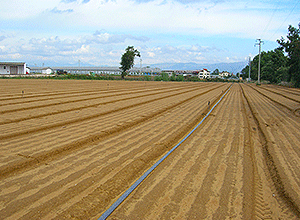 Considering its huge importance, it’s crucial to know what organic substance is, how does it arrive to the soil and how does it change, but most important is the acknowledge of the key factors of mineralization processes of organic Nitrogen and its availability as nutrient for agricultural crops. The organic substance content in agricultural fields varies from minus 1% in sandy soils, to intermediate values as 1 and 3 % in agricultural fields, up to over 7-8% in forests and over 80-90% in peat.
Organic substance of the soil is formed by molecules of Carbon, Nitrogen, Oxygen, Hydrogen and in a lower quantity by molecules of Phosphorous, Potassium, Sulphur, Ferrous, etc. There are 2 main sectors which it can be divided into: the “unstable” sector is formed by basic organic compost such as sugar, peptides, enzymatic proteins and nucleic acids, which can be present freely in the soil; the “stable” one is composed by humus. Humus is the high-value component of the organic substance which can improve the physical, structural, chemical and biochemical characteristics of the soil. Furthermore, it carries out nutritional functions, and it plays also an active role in some important functions of the soil, related to microbic activities, etc.
Humus is a polymeric compost, with an inconstant composition depending on the genesis, with huge molecular weight, featuring colloidal characteristics which are very degradation-resistant, with ration C/N ≈ 10 (≈ 50% C and 5% N). During the humification process of the organic substance, quantities of Carbon are lost with consequent concentration of Nitrogen (N).
Humus (also known as “humic substances”) improves soil’s structure, making it less fragile in case of heavy rain and more resistant to trampling caused by the agricultural operations. Furthermore, it increases soil’s capacity of light and heat caught thanks to its dark color, constituting also a long-term stream of food for microorganisms, affecting their growth and reproduction activities.
But that’s not all: humus can “link” some nutrient elements such as Ferrous and other cation, whose are extremely important for the plants’ growth, giving them back to the plants when needed. Furthermore, it increases the cation exchange capacity (or C.S.C.).
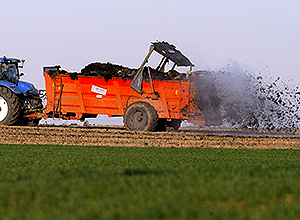
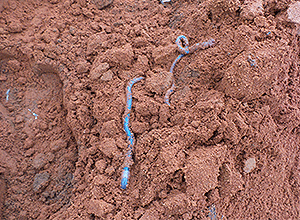 Bacteria and microorganisms of the soil, grow and multiply quickly when organic substance is added in the soil, thanks to the green manure technique or crop residues, manure, organic fertilizers, etc. They rapidly decompose the organic components when they are simple, such as sugar, amino acids and high-quality proteins. On the contrary, the degradation will be slow in case of complex components like cellulose, lignin, chitin, ecc. Earthworms ensure the right mix of organic residues in the soil, bringing the organic substance in contact with microorganisms. Soil bugs on the other hand, together with arthropod, perform functions of crumbling and harrowing of organic residues, allowing to soil’s microorganisms to get all the parts of organic residues.
Organic substance in the soil affects directly plants’ growth, thanks to its influence on soil’s physical, chemicals and biological characteristics. The organic substance in fact, favoring soil structuring, gives a relevant help to cultivations, allowing the circulation of air and nutrients in the soil. It has a specific surface, interacts with microelements and minerals, it acts as cationic exchanger (applying to the soil a high C.E.C.) also as Nitrogen reserve.
Organic substance contains 20-70% of Phosphorous of the soil, and over 90% of Sulphur in total; it represents the source of energy for Nitrogen-fixing bacteria, it helps the roots’ development (so the nutrients absorption by the plant) and seeds’ germination. Furthermore, it stimulates physiological and biochemical processes of the cellular metabolism, acting as a filter allowing a decrease of toxic effects caused by heavy metals and pesticides.
 The presence of organic substance grants a good porosity, as result a better aeration and drainage of the soil, limiting the risk of water stagnation. This effect helps roots’ growth and biomass activity, stimulating also biological cycles of nutrients, whom outline the soil fertility. The conservation of a good soil structure is also connected to some environmental aspects such as the erosion. The aggregate exfoliation and the consequent runoff due to heavy rains lead to the loss of the superficial layers of the soil causing soil depletion of nutrients, with ensuing pollution problems and eutrophication/burying of channels and rivers. The organic substance has a strong influence on soil pH, since it provokes a slight acidification, stimulating the microbic biomass’ growth, which produces CO2.
Furthermore, various plants’ roots release various organic acids as oxalic acid, citric acid, etc. Organic substance affects water retention capacity, not only increasing soil porosity and improving its structure, but also because it can retain huge quantity of water. The retained water regulates the temperature of the soil thanks to its thermal capacity.
The quantity of humus produced by different organic materials (dry or fresh) depends on various factors, and the humus yield is principally linked to the quality of organic substance available at the starting point. The ratio between Carbon and Nitrogen (C/N) contained in buried materials is extremely important as well: it, in fact, affects the humification process and nutrients’ release time. In general, we can assume that a low C/N ratio (<10) means a rapid nutrients’ release and a poor level of humification; on the other hand, with a high ratio (>30) we find the opposite situation. The humus yield of wheat stubble for instance, is different from the one of manure and green manure. The degree of yield of humus is measured with a coefficient, called isoumic coefficient, expressed with the K1 symbol and applied to the organic substance contained in the starter materials.
In the example n.1, it has been calculated the quantity of humus which can be obtained from 10.000 Kilograms medium ripening, with isohumic coefficient (K1) of nearly 0,3. On this basis we can assume that 10.000 kg of manure (S.S = 22% and K1 = 0,3) can give 660 Kg of humus. Each product (crop residues, organic fertilizers, ecc.) has a different isohumic coefficient, which is needed to calculate the relative humus yield (see chart n.1).
|
Chart n.1 Characteristics of different organic materials producing humus (Extract from Panero et al) |
|||||
|
|
Dry Substance % |
Organic Substance % |
C/N Ratio |
Isohumic Coefficient K1 |
Stable Humus x ton. of product (K1 x S.O.x10) |
|
Crop residues |
|||||
|
Wheat stubble |
88,91 |
82,79 |
111 |
0,15 |
124,18 |
|
Barley stubble |
86,40 |
81,14 |
87 |
0,15 |
121,70 |
|
Corn straws |
86,00 |
80,76 |
81 |
0,20 |
161,52 |
|
Organic fertilizers |
|||||
|
Medium ripening bovine manure |
22,00 |
16,40 |
29 |
0,30 |
49,20 |
|
Equine manure |
30,00 |
26,30 |
23 |
0,30 |
79,00 |
|
Poultry manure |
85,80 |
63,00 |
7 |
0,30 |
189,00 |
|
Green manure and grasslands |
|||||
|
Medical grassland |
19,60 |
17,97 |
16 |
0,25 |
44,92 |
|
Rye grassland |
14,09 |
12,77 |
18 |
0,20 |
25,54 |
|
Vetch grassland |
13,85 |
12,75 |
15 |
0,25 |
31,87 |
|
Stable lawn |
17,56 |
15,76 |
19 |
0,20 |
31,50 |
Example n.1: if we add 10.000 kg/ha of medium ripening manure, how much will increase the organic substance in the soil?
 In the end, mineralization coefficient (K2) indicates the quantity of organic substance in the soil which is normally mineralized in one year. This coefficient varies according to weather and physical-chemical-pedological characteristics and it’s influenced by the soil preparation and its management. It gains higher values in case of light and oxygenated soils, on the contrary, it gains lower values in case of clayey or heavy soils. Mineralization process is low during cold seasons and higher during humid and warm seasons, exalted by the aeration of the soil reached by the soil preparation techniques; in other terms, it depends on the length of the period of soil aeration.
According to different studies, the medium valor of K2 (indicated in chart n.2) from <1,0% for clayey soils, up to 2,2% for sandy soils.
Chart n.2 – medium values of K2 applicable to different soils
| Type of soil | K2% |
| Sandy | 1,8-2,2 |
| Loamy | 1,0-1,8 |
| Clayey | < 1,0 |
Organic substance in the soil represents a crucial factor to be known and always considered. Organic substance in fact, represents the biggest Carbon reserve on Earth (which is essential, especially in relation to the increase of CO2 in the atmosphere) as well as a source of hydrogen nutrient for crops. Furthermore, thanks to its most valuable component – humus – it improves the soil structure, it helps the plants’ growth, it fights soil erosion and desertification phenomenon, withstanding the humidification process. But that’s not all: both level of porosity and water retention capacity of the soil are influenced by the organic substance.
Forigo Roter Italia supplies specific machinery for soil preparation, for an optimal development of the crop, without affecting the soil composition, and preserving its organic substance. In Forigo products catalogue you will find innovative seed drills, stone buriers, bed formers. power harrows and many more, suited for any working condition.
If you need further info regarding this article’s matter or regarding the range of Forigo solutions, don’t hesitate to contact us: our team is always at your disposal!